
When you need CTO-level thinking but can't justify the hire
Most mid-sized businesses don't need a full-time CTO. They need experienced technology thinking, available consistently, at a scale that fits where they are now.
There's a conversation that comes up often with owners of 30- to 80-person businesses. They know their technology isn't right. They know decisions are being made without enough expertise in the room. And someone — usually the CFO — has suggested hiring a CTO.
The instinct makes sense. If technology is the problem, get a technology leader. But a full-time CTO at that stage almost never works.
The mismatch
A good CTO costs north of £150k. They want a team to build, a product to own, and a seat at the board. Most mid-sized businesses don't have those things to offer — and don't need them. What they need is someone who understands the full picture, shows up regularly, and gives honest advice about what to do next.
That's the gap between needing CTO-level thinking and needing a CTO.
Four ways to get technology leadership
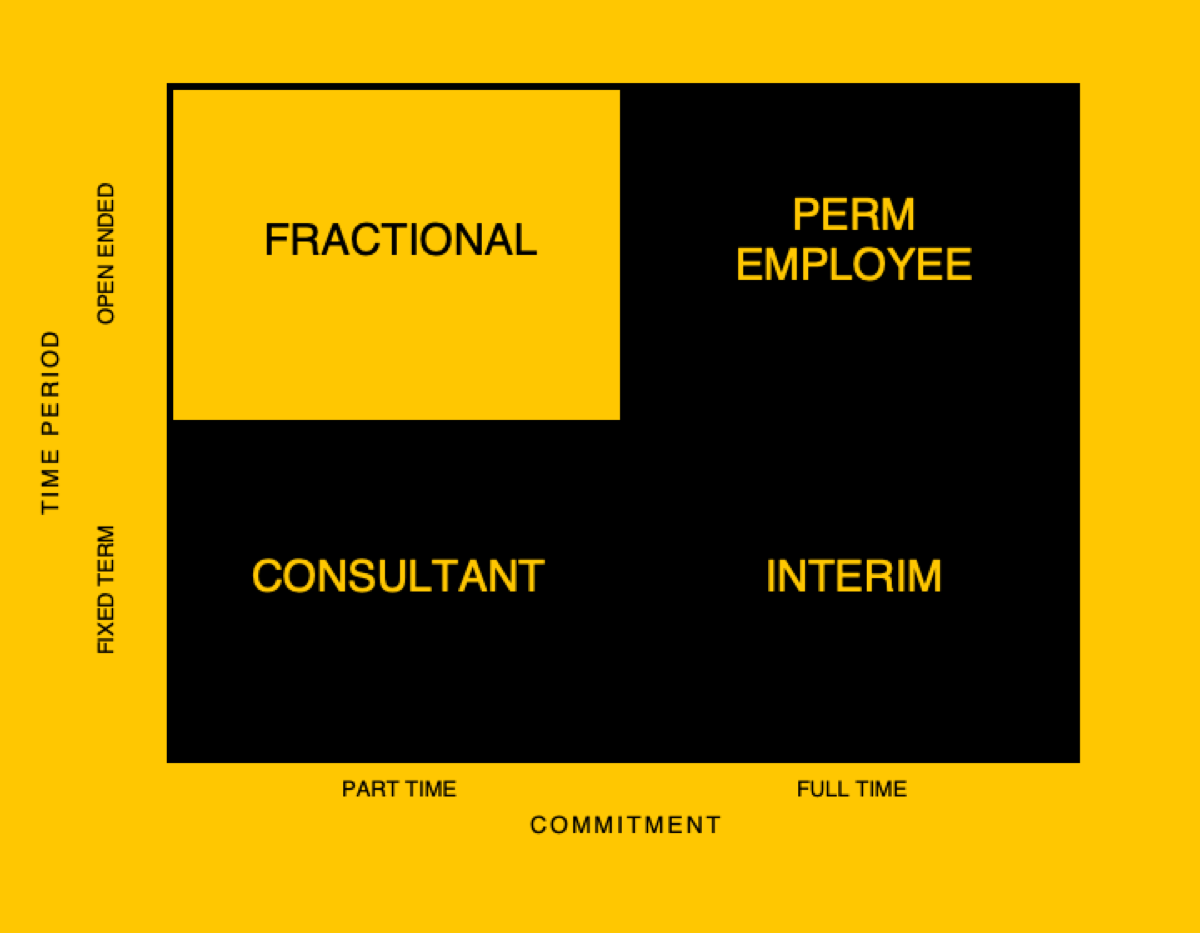
Not all technology leadership looks the same. There are four common models, and they sit on two axes: how much of someone's time you're buying, and for how long.

Fractional — part-time, ongoing. A senior technology adviser retained on a light-touch basis. They know your business, build context over time, and are available when decisions come up. This is where most mid-sized businesses should start.
Permanent employee — full-time, ongoing. The right answer when you have a product to build, a team to lead, and a technology function that justifies a dedicated seat. Most businesses get here later than they think.
Consultant — part-time, fixed-term. Brought in for a defined scope — an audit, a vendor selection, a migration plan. Useful for specific problems, but they leave when the project ends and take the context with them.
Interim — full-time, fixed-term. A temporary executive covering a gap or leading a transformation. Expensive and intensive — the right tool for crisis or major change, not for steady-state advisory.
Why fractional works
The most valuable thing a retained adviser brings isn't any single decision. It's the accumulated understanding that builds over time. They know what was tried last quarter, why you chose this vendor, and what the team is actually capable of. That context makes every conversation more useful than the one before.
Five days per quarter is usually enough. A strategy session, a few ad hoc calls, a sounding board when a vendor pitches something you're not sure about. It scales with the business — and it costs a fraction of a full-time hire.
The question to ask
If you're considering hiring a CTO, ask yourself: do I need someone full-time building a technology function, or do I need experienced thinking available consistently? Most business owners who answer honestly land on the second.
If that sounds like your situation, book a conversation and we'll work out what the right model looks like for your business.
Written by
Robin Carswell
More on
What should you actually do about AI?
Most founders told to "get an AI strategy" haven't identified which problem they want it to solve. That's usually the better place to start.
Where does your data actually live?
When you sign up to a SaaS tool, your data goes somewhere. Most UK businesses haven't decided where — and clients in legal, healthcare, and financial services will ask.
Is your technology stack overdue a clean-up?
Most technology stacks weren't planned — they accumulated. When businesses actually look, 20–30% of software spend is usually doing nothing useful.